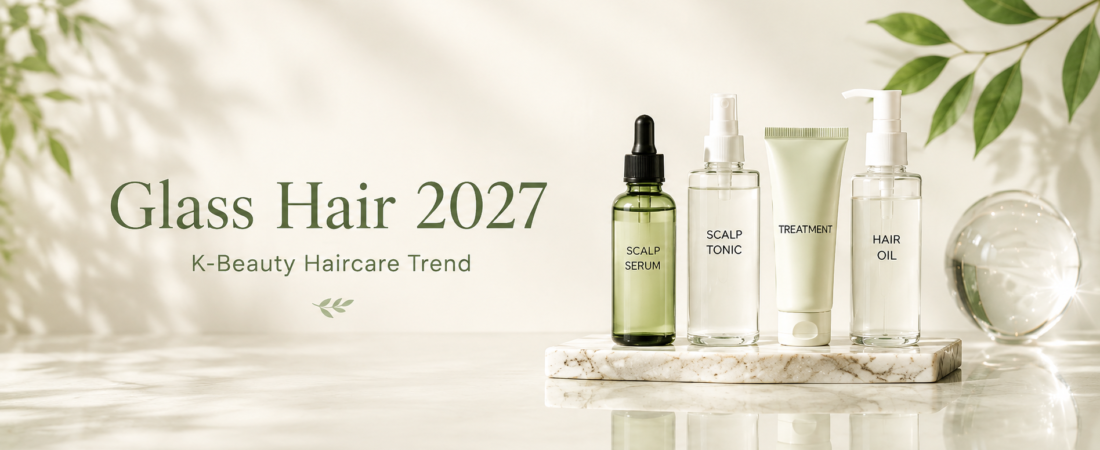
Glass hair is becoming one of the clearest signs that K-beauty is expanding beyond skincare.
For years, Korean beauty became globally recognizable through ideas such as:
- Glass skin
- Layered hydration
- Barrier care
- Lightweight serums
- Ingredient-focused routines
- Scalp-first haircare
Now the same philosophy is moving into hair.
The goal is no longer simply:
make hair look shiny.
The newer idea is:
build smoother, healthier-looking hair that naturally reflects more light.
In 2026, Vogue identified scalp care and glass hair as connected K-beauty trends, describing a scalp-first routine followed by lightweight essences, mists and nourishing masks that create a polished, silky finish without excessive heaviness.
That makes glass hair more interesting than a temporary styling trend.
It may represent the next stage of skincare-inspired haircare heading into 2027.
Glass Hair: Quick Summary
| Factor | Traditional Shine Haircare | Glass Hair |
|---|---|---|
| Main goal | Add shine | Smooth, reflective finish |
| Focus | Hair surface | Scalp + hair condition |
| Routine | Shampoo + conditioner | Scalp care + repair + serum + protection |
| Hero formats | Shine spray, oil | Masks, essences, glosses, serums |
| Ingredient story | Oils and silicones | Proteins, amino acids, HA, bond care, oils |
| Finish | Glossy | Smooth, polished, mirror-like |
| Hair health angle | Secondary | Increasingly important |
| 2027 opportunity | Established | High |
The biggest difference is that glass hair is moving from styling toward treatment-led haircare.
What Is Glass Hair?
Glass hair describes hair that looks:
- Smooth
- Sleek
- Polished
- Frizz-controlled
- Highly reflective
- Healthy-looking
The name comes from the way light reflects from an even hair surface.
Hair experts interviewed by Who What Wear explain that when the cuticle lies flatter and more evenly aligned, light reflects more consistently, helping create the glossy, almost mirror-like effect associated with glass hair.
That means the finish is not only about applying a shine spray.
Hair condition matters.
Porous, rough or heavily damaged strands tend to scatter light more unevenly, which can make the hair appear dull even when oil or gloss products are applied.
This creates an important shift:
Glass hair is increasingly being marketed as the result of smoother hair condition, not simply more shine product.
Why Is Glass Hair Growing Now?
Several beauty trends are converging.
1. Glass Skin Created the Language First
K-beauty already taught global consumers to understand:
glass skin
as a visual result associated with hydration, smoothness and healthy-looking skin.
Glass hair uses a similar idea.
Instead of:
smooth + hydrated + reflective skin
the target becomes:
smooth + conditioned + reflective hair.
This makes the concept extremely easy to communicate.
Consumers already understand what “glass” means in beauty.
K-beauty does not need to invent an entirely new visual language.
It can extend an existing one.
2. Scalp Skinification Gives Glass Hair a Foundation
One of the biggest differences between modern Korean haircare and basic shine styling is the focus on the scalp.
Vogue’s 2026 K-beauty coverage connected Korean glass hair directly with a scalp-first philosophy, noting that scalp-nourishing shampoos and soothing treatments are increasingly used before essences, mists and masks are added for polish and shine.
This connects naturally with our guide to scalp skinification in 2027.
The logic is simple:
healthy-looking scalp environment → better haircare routine → smoother-looking lengths → polished finish.
That does not mean every scalp serum creates glass hair.
But it shows how the category is becoming more systematic.
3. Korean Haircare Is Becoming More Ingredient-Led
Haircare traditionally sold through broad promises:
- Repair
- Shine
- Moisture
- Volume
- Smoothness
Korean haircare is increasingly borrowing the ingredient language of skincare.
Byrdie highlighted Korean haircare brands using concepts such as multiple hyaluronic acids, proteins, peptides, scalp serums and keratin-focused technologies, while also noting growing global retail visibility for Korean haircare.
This means consumers may increasingly ask:
What ingredient creates the shine?
rather than simply:
Does this product make hair shiny?
That is a major change in shopping behavior.
4. Repair and Shine Are Merging
Older glossy-hair routines often relied heavily on:
- Oils
- Silicone-heavy finishing products
- Straightening
- Heat styling
Those tools can still be effective for appearance.
But 2026 haircare trends increasingly emphasize hair condition, bond care and maintenance, not styling alone. Vogue described the wider haircare market as moving toward products designed to extend and improve hair health rather than only manipulate style.
For glass hair, that creates a new positioning opportunity:
repair + shine
rather than:
shine only.
5. Korean Haircare Is Expanding Globally
Korean skincare has already built enormous international awareness.
Haircare is now following.
Byrdie described Korean haircare as one of the faster-growing areas of the K-beauty conversation in 2026, with brands gaining visibility through major U.S. retailers.
This matters because the consumer already understands:
Korean beauty = innovation + routines + ingredients.
Haircare brands can benefit from that existing reputation.
Glass Hair Is Not Just Hair Oil
Hair oil can be useful.
But glass hair usually requires a combination of steps.
A modern routine may include:
- Clean scalp and hair
- Condition and detangle
- Repair damaged areas
- Apply lightweight leave-in treatment
- Use heat protection when styling
- Smooth the hair surface
- Finish with a small amount of serum, oil or gloss
Who What Wear’s glass-hair guidance similarly emphasizes cleansing, conditioning, heat protection, smoothing and restrained use of finishing products rather than simply coating the hair in oil.
The goal is:
reflective
not:
greasy.
What Ingredients Matter for Glass Hair?
There is no single “glass hair ingredient.”
Instead, several ingredient families can contribute to the result.
1. Amino Acids and Proteins
Hair is primarily made of keratin protein.
That makes protein- and amino-acid-based treatments an obvious part of repair-focused haircare.
Korean haircare brands increasingly use:
- Keratin
- Hydrolyzed proteins
- Amino acids
- Vegan protein systems
Byrdie highlights Korean brands such as UNOVE and Narka that combine protein or keratin-focused technologies with smoothness, strength and glass-hair positioning.
2027 Opportunity
Expect more formulas combining:
protein repair + immediate shine.
2. Hyaluronic Acid
Hyaluronic acid is already deeply familiar to skincare consumers.
Now the ingredient is moving into haircare.
In hair products, hyaluronic-acid positioning is usually about:
- Moisture
- Softness
- Frizz control
- Lightweight hydration
Byrdie specifically highlighted HealingBird’s use of multiple forms of hyaluronic acid in lightweight hair formulas designed to revive dry-looking strands and smooth frizz.
2027 Opportunity
The wording may increasingly resemble skincare:
hydrating hair essence
instead of:
moisturizing spray.
3. Silicones
Silicones sometimes receive negative marketing attention.
But they can be extremely effective for a glass-hair finish.
Hair experts note that ingredients such as:
- Dimethicone
- Amodimethicone
can help smooth the surface of hair, improving the way light reflects from the strand.
The more useful question is not:
Are silicones bad?
It is:
Is the finished formulation appropriate for the user’s hair type and cleansing routine?
Heavy buildup can make some hair feel flat.
A well-designed lightweight formula can produce smoothness without excessive weight.
4. Lightweight Plant Oils
Common shine-focused oils include:
- Argan
- Jojoba
- Camellia
- Other lightweight botanical oils
These can help reduce roughness and improve gloss.
The key is dosage.
Too much oil can make fine hair look heavy rather than reflective.
2027 Opportunity
Expect more:
micro-oil serums
dry oils
and:
weightless gloss treatments.
5. Bond-Repair Technologies
One of the biggest opportunities in glass hair is the combination of:
structural repair + cosmetic shine.
Hair exposed to:
- Bleaching
- Coloring
- Heat
- Chemical treatments
may become rougher and more porous.
Bond-building and repair-focused formulas give brands a stronger story than shine alone.
The consumer promise becomes:
make damaged hair look smoother while supporting better hair condition over time.
6. Ceramides and Lipid-Inspired Care
Ceramides are strongly associated with facial barrier care.
Haircare can borrow the same language.
The hair cuticle relies on an organized surface and lipid environment for smoothness.
This creates room for products positioned around:
- Lipid replenishment
- Ceramide-inspired care
- Cuticle smoothing
- Moisture retention
This is another example of skincare vocabulary expanding into haircare.
7. Heat Protectants
Heat can help produce an immediately sleek finish.
But repeated high heat can also contribute to damage.
That makes heat protection an essential part of a responsible glass-hair routine.
Who What Wear recommends heat protection before blow-drying or straightening as part of the glass-hair process.
The stronger 2027 positioning may therefore be:
shine + heat protection
rather than:
shine through heat alone.
Is Glass Hair Only for Straight Hair?
No.
But the appearance can differ depending on hair texture.
Straight hair naturally provides a larger continuous surface for light reflection.
That can make the traditional mirror-like glass-hair look easier to see.
However, wavy, curly and coily hair can also look highly glossy and reflective.
Hair experts quoted by Who What Wear note that different textures may use different styling methods to achieve a glass-like finish.
This is an important distinction.
Glass hair should not mean:
everyone must straighten their hair.
A better 2027 definition is:
healthy-looking, smooth, high-reflection hair within the person’s natural or chosen texture.
That makes the trend more inclusive.
Glass Hair vs Liquid Hair
The two terms are often used interchangeably.
But there is a small practical distinction.
Glass Hair
Usually emphasizes:
- Reflection
- Smooth surface
- Sleekness
- Mirror-like shine
Liquid Hair
Often emphasizes:
- Movement
- Flow
- Silky texture
- Soft, fluid appearance
A hairstyle can have both characteristics.
In practice, brands may use whichever term communicates the product result more effectively.
How K-Beauty Approaches Glass Hair Differently
The Korean version is interesting because it is not only a finishing technique.
The routine increasingly starts earlier.
Vogue describes Korean glass hair as developing from scalp care into nourishing treatments and lightweight finishing products rather than simply applying heavy shine products at the end.
A simplified K-beauty-inspired glass-hair routine could look like:
Step 1: Scalp Care
Choose a shampoo or scalp treatment appropriate for the scalp.
Step 2: Conditioning
Use conditioner primarily on the lengths unless the product is specifically formulated for scalp use.
Step 3: Weekly Treatment
Add a mask, protein treatment or bond-repair product depending on hair condition.
Step 4: Hair Essence
Use a lightweight essence or serum for hydration and smoothness.
Step 5: Heat Protection
Protect before blow-drying or using hot tools.
Step 6: Controlled Styling
Direct airflow downward and avoid unnecessary repeated heat passes.
Step 7: Gloss Finish
Use a small amount of oil, serum or gloss on the lengths and ends.
This is much closer to a skincare routine than traditional one-product shine styling.
Korean Products Already Reflect This Shift
Several Korean brands already show pieces of the glass-hair strategy.
UNOVE
UNOVE has become known for repair-focused products using keratin and protein-driven positioning, helping connect damage care with smoothness and shine.
Narka
Narka combines vegan protein with styling-oriented products designed to create sleek finishes while maintaining a stronger hair-health narrative.
Mise En Scène
The Perfect Serum line remains one of the most recognizable Korean examples of lightweight oil-serum haircare and was included in Vogue’s 2026 K-beauty coverage alongside the glass-hair trend.
Moremo
Moremo is known for concentrated, fast-acting treatment formats designed around softness, shine and damaged-hair care.
These brands are not identical.
But together they demonstrate how Korean haircare is combining:
treatment + texture + shine.
Why Conditioners May Matter More Than Expected
Serums and oils get most of the social-media attention.
But conditioner may be just as important.
ELLE’s 2026 coverage of Korean conditioners emphasized the connection between scalp-focused Korean haircare, moisturizing formulas and stronger, glossier-looking strands.
The benefit is straightforward.
If conditioning helps:
- Reduce tangling
- Improve softness
- Reduce roughness
- Improve manageability
the hair surface may appear smoother before styling even begins.
Beauty Seller Lab View
Glass hair may eventually become less about buying one viral “glass hair serum” and more about building the correct combination of:
cleanser + conditioner + treatment + leave-in + protection.
7 Glass Hair Trends to Watch in 2027
1. Repair + Gloss Products
The strongest products may promise both:
immediate shine
and:
ongoing damage care.
2. At-Home Hair Gloss Treatments
Consumers increasingly want salon-inspired results at home.
Expect more:
- Rinse-out glosses
- Water treatments
- Lamellar-style treatments
- Shine masks
- Clear gloss products
3. Lightweight Hair Essences
K-beauty has already normalized essences in skincare.
Hair essences could become more globally familiar as consumers seek hydration without heavy oil.
4. Scalp-to-Length Routines
The scalp and the hair shaft may increasingly be treated as two different zones.
This is exactly the same logic used in skincare personalization.
For scalp-focused products, see our guide to the 10 Best Korean Scalp Serums & Treatments for 2027.
5. Protein and Bond-Care Ampoules
Ampoule language fits naturally within K-beauty.
It creates a treatment-oriented format that feels more advanced than a traditional conditioner.
6. Heat Protection Becomes Part of Shine Marketing
Consumers may become less interested in shine products that require aggressive heat styling.
The better message is:
protect + smooth + shine.
7. Glass Hair Expands Across Hair Textures
Brands that define glass hair only through ultra-straight styling may limit the category.
Products that deliver:
- Frizz control
- Surface smoothness
- Curl definition
- Reflective shine
across different textures may have greater long-term potential.
What Should Beauty Sellers Watch?
Glass hair creates several useful product-development and merchandising opportunities.
| Consumer Need | Product Opportunity |
|---|---|
| Dull hair | Shine serum |
| Damaged hair | Repair + gloss treatment |
| Frizz | Smoothing essence |
| Dry lengths | Hydrating hair mist |
| Bleached hair | Protein / bond treatment |
| Heat styling | Heat-protective gloss |
| Fine hair | Lightweight serum |
| Curly hair | Shine + definition treatment |
| Scalp concerns | Separate scalp-serum routine |
The category also creates strong bundles.
For example:
Glass Hair Routine Set
could contain:
- Shampoo
- Conditioner
- Weekly treatment
- Hair essence
- Heat protectant
- Finishing serum
This is a retail model K-beauty understands extremely well.
Why Glass Hair Has Strong Marketing Potential
The trend has several commercial advantages.
It Is Visual
Consumers can immediately understand:
dull vs glossy.
That makes it ideal for:
- TikTok
- Reels
- Before-and-after content
- Influencer demonstrations
- Live commerce
It Is Easy to Explain
The phrase “glass hair” communicates the target appearance without a long ingredient lesson.
It Creates Multi-Product Routines
Unlike a single trend ingredient, glass hair can support an entire category.
It Connects to K-Beauty
Consumers already associate glass-like finishes with Korean beauty.
It Works With Existing Ingredients
Brands do not necessarily need a completely new active.
They can reposition:
- Proteins
- Oils
- Silicones
- Hyaluronic acid
- Ceramides
- Amino acids
inside a stronger routine story.
The Biggest Risk: Making Glass Hair Only About Heat
There is one obvious problem with high-gloss styling.
The quickest path to ultra-smooth hair can involve:
- Blow-drying
- Straighteners
- High temperatures
- Repeated styling
That may create the appearance consumers want while contributing to future damage if used aggressively.
This creates a strategic opportunity.
The most credible glass-hair brands should emphasize:
hair condition first
and:
heat styling second.
Products that help smooth the surface without requiring excessive heat may become increasingly attractive.
Another Risk: Too Much Product
Glass hair should look:
light-reflective.
Not:
oil-coated.
This can be particularly important for:
- Fine hair
- Low-density hair
- Oily scalps
A heavy mask + leave-in cream + oil + shine spray may produce the opposite of the desired result.
The 2027 consumer may therefore become more interested in:
high performance with less weight.
That fits the broader K-beauty shift toward streamlined routines.
Glass Hair and the Future of Korean Haircare
Korean haircare has several advantages in this category.
Texture Innovation
K-beauty already excels at:
- Lightweight liquids
- Essences
- Ampoules
- Mists
- Serums
Routine Building
Consumers already expect Korean beauty to include multiple targeted steps.
Ingredient Storytelling
Korean brands are comfortable selling products around identifiable ingredients.
Scalp Expertise
Scalp-first routines create a deeper story than temporary cosmetic gloss.
Packaging Innovation
Applicators, ampoules, spray formats and concentrated treatments can help products stand out.
That is why glass hair may become more than a hairstyle trend.
It could become a new merchandising framework for Korean haircare.
Beauty Seller Lab View
The most interesting thing about glass hair is not the shine.
It is what sits behind the shine.
Korean haircare is increasingly combining:
scalp care
repair
hydration
protein
lightweight treatment
heat protection
and:
surface smoothing.
The mirror-like finish becomes the visible result of a larger routine.
That is extremely similar to what happened with glass skin.
Glass skin was never just:
apply something shiny.
The strongest version of the trend became associated with:
- Hydration
- Texture
- Barrier condition
- Consistent routines
Glass hair could follow the same path.
The trend may therefore evolve from:
How do I make my hair shiny?
to:
How do I maintain hair that naturally looks smoother, healthier and more reflective?
That is a much larger commercial category.
FAQ
What is glass hair?
Glass hair is a high-shine hair aesthetic characterized by a smooth, polished surface that reflects light strongly.
Is glass hair a Korean trend?
The term has circulated globally, but K-beauty has become strongly associated with scalp-first, treatment-focused routines that support the polished “glass hair” aesthetic. Vogue identified scalp care and glass hair among its major K-beauty themes for 2026.
What makes hair look glassy?
A smoother hair surface reflects light more evenly. Conditioning, surface smoothing, heat protection and appropriate styling can all contribute.
Can damaged hair achieve glass hair?
Damaged hair can still be styled to look glossy, but highly porous or rough hair may require more conditioning and repair-focused care to achieve an even reflective finish.
Do I need hair oil for glass hair?
Not necessarily. Oils are one option, but lightweight serums, conditioners, gloss treatments and smoothing products can also contribute.
Are silicones good for glass hair?
Silicones can be effective at smoothing the hair surface and improving shine. The ideal formula depends on hair type, amount used and cleansing routine.
Is glass hair only for straight hair?
No. Different textures can achieve glossy, reflective finishes, although the styling method and final appearance may differ.
What Korean haircare products are good for glass hair?
Products focused on repair, smoothing and shine from brands such as UNOVE, Moremo, Mise En Scène and other Korean haircare brands are relevant examples.
Is scalp care necessary for glass hair?
It is not required to create immediate shine, but scalp-first care is an important part of the Korean haircare philosophy increasingly associated with long-term hair condition.
Will glass hair remain a trend in 2027?
Current 2026 signals suggest that high-gloss, scalp-first and treatment-oriented Korean haircare has continued growth potential. This is a market forecast rather than a guaranteed outcome.
The Bottom Line
Glass hair is becoming the haircare version of a familiar K-beauty idea:
visible beauty built through routine and condition rather than surface effect alone.
For 2027, the strongest opportunities may come from:
repair + gloss
protein + shine
scalp care + smoothness
lightweight essences
at-home gloss treatments
heat protection
and:
products designed for different hair textures.
The biggest winner may not be the product that creates the most artificial shine.
It may be the product that helps hair look:
smooth
healthy
soft
and:
naturally reflective.
That is where glass hair starts becoming more than a styling trend.
It becomes a haircare category.